US government moves $470 million in seized crypto to Coinbase wallets, raising Bitcoin sale questions
By Oluwapelumi Adejumo
Read original article on CryptoSlateThe US government moved about $470 million in seized crypto to likely Coinbase Prime addresses, according to Arkham, reviving questions over potential asset sales.
On Oct. 7, blockchain analytics firm Arkham Intelligence said the transfers included Bitcoin, wrapped Bitcoin and USDT.
Arkham linked the transferred assets to seizures involving the 2016 Bitfinex hack and Alameda Research, the trading firm previously controlled by FTX founder Sam Bankman-Fried.

While we obviously can't say the Bitcoin is being sold, it is one plausible outcome. It's probably just as likely they are performing internal wallet hygiene or administrative work.
Still, the destination puts the transaction under greater scrutiny after the Trump administration pledged to retain Bitcoin placed in the US Strategic Bitcoin Reserve and federal officials earlier this year rejected claims that seized coins had been quietly sold.
A previous sale claim ended in a government denial
The latest movement lands nine months after the US Marshals Service pushed back against reports that Washington had disposed of Bitcoin surrendered in the Samourai Wallet criminal case.
Bitcoin Magazine reported in January that roughly $6.3 million of Bitcoin paid to the Justice Department as part of guilty pleas appeared to have been sold. Sen. Cynthia Lummis, one of Congress’ most prominent Bitcoin advocates, responded by questioning why the government would liquidate the asset after President Donald Trump had directed officials to preserve Bitcoin for the national reserve.
But the Marshals Service told DL News it had not sold those BTC, while adding that its crypto liquidations pass through a multi-level approval process before forfeited assets can be disposed of.
The issue became more sensitive after Trump established the Strategic Bitcoin Reserve in March 2025. His executive order said Bitcoin deposited into the reserve “shall not be sold” and should instead be maintained as a US reserve asset.
The White House argued at the time that premature government Bitcoin sales had already cost taxpayers more than $17 billion in foregone value.
Seized Bitcoin does not automatically mean reserve Bitcoin
The policy, however, leaves room for some government-controlled crypto to move out of federal hands.
Trump’s order permits digital assets to be disposed of when required by a court or law, and when officials determine that assets or their proceeds should be returned to verified crime victims, used for law-enforcement purposes or applied toward other statutory forfeiture obligations.
That distinction could be particularly important for these latest transfers.
The government seized about 95,000 Bitcoin in 2022 from wallets controlled by Ilya Lichtenstein and Heather Morgan as part of the investigation into the Bitfinex hack. Lichtenstein later admitted to hacking the exchange, where about 119,754 Bitcoin were stolen in 2016. Authorities subsequently seized another roughly $475 million in assets tied to the theft.
Those assets have faced competing forfeiture and restitution claims, so their legal treatment may differ from Bitcoin already transferred into the Strategic Bitcoin Reserve.
The FTX collapse also led to criminal forfeiture proceedings. The judge in Bankman-Fried’s case authorized recovered forfeiture funds to compensate victims, adding another potential victim-repayment dimension to the latest movements.
That makes Wednesday’s transaction a test of how much can be inferred from government wallets alone.
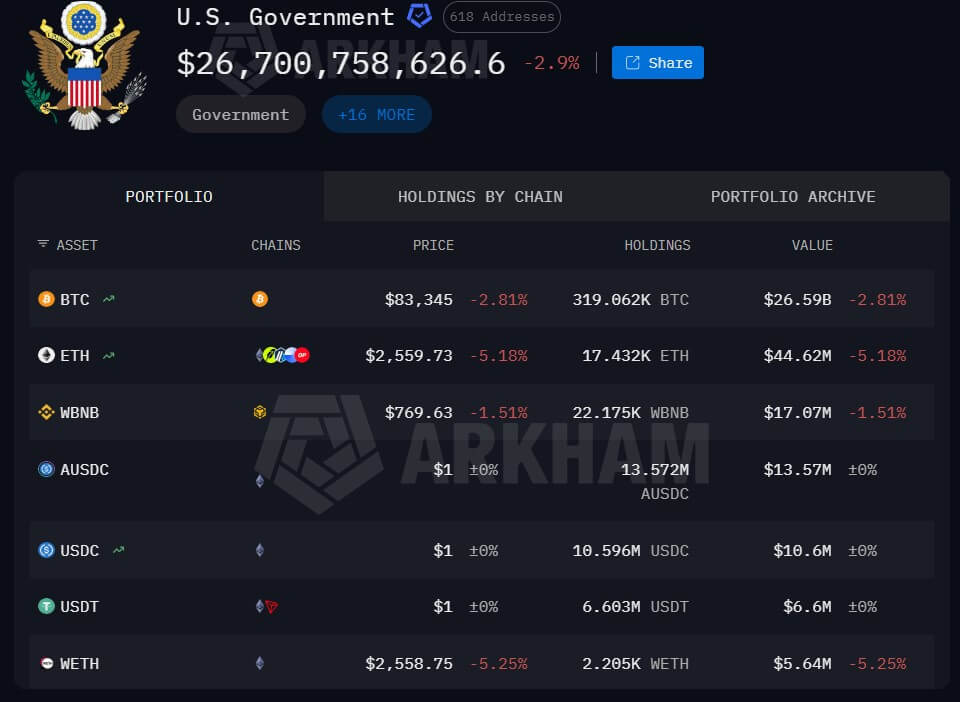
A confirmed sale of Bitcoin deposited into the Strategic Bitcoin Reserve, outside the order’s exceptions, would reopen questions over whether federal agencies are following the administration’s accumulation policy. A transfer made for custody, restitution or another permitted forfeiture purpose would fall into a different category.
For now, Arkham reports hundreds of millions of dollars leaving US government wallets for likely Coinbase Prime deposit addresses. Whether those assets remain there, move into new custody arrangements, or are converted into dollars will determine whether the transaction becomes another false alarm over government Bitcoin sales or the first sign of a significant new disposal.
The post US government moves $470 million in seized crypto to Coinbase wallets, raising Bitcoin sale questions appeared first on CryptoSlate.
This story was originally published on CryptoSlate. DennTech aggregates headlines from top crypto publications to keep traders informed.
Read full article on CryptoSlate